阿特新闻
Despina Tunberg评论〡蒲洧:玄妙色——在虚空中绘画
时间:2026年10月19日 作者: 来源:阿特网
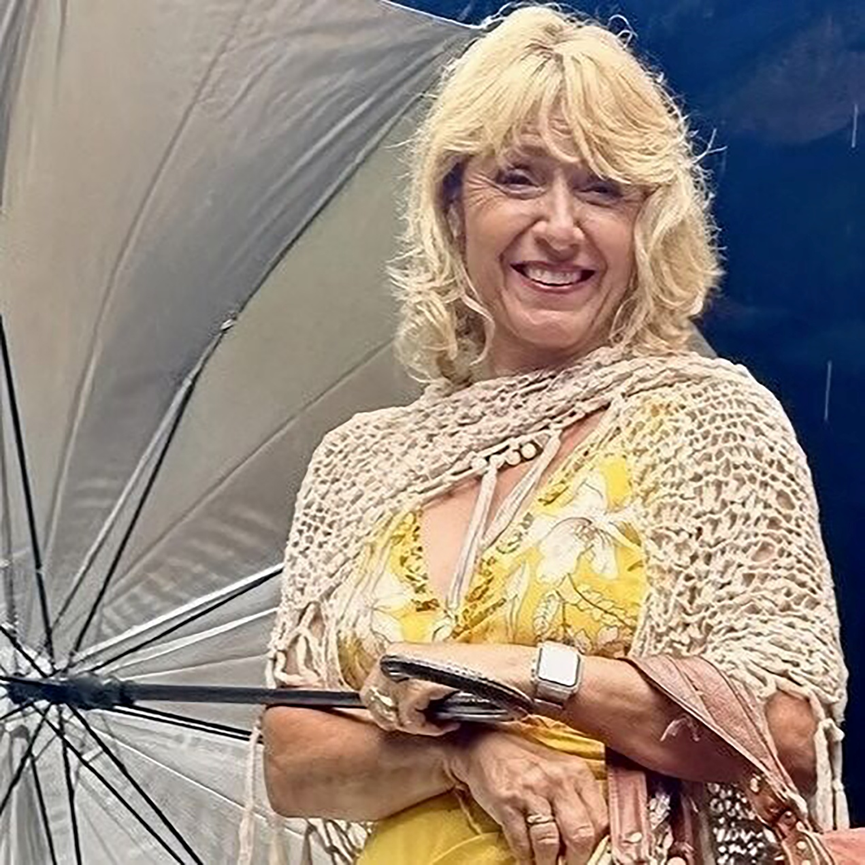
策展人兼评论家德斯皮娜•滕伯格
德斯皮娜•滕伯格(Despina Tunberg)介绍:
美国《世界艺术书籍》(World Wide Art Books)和“艺术维塔”(Artavita)机构联合创始人、策展人、评论家、作家、画家,1958年出生于希腊,在希腊和美国拥有画廊,出版了多部小说,现定居于美国加州圣巴巴拉。
《世界艺术书籍》出版社(WWAB)成立于1997年,是一家致力于推广和传播当代艺术的杰出出版社,已出版超过15,000位艺术家的作品,成为艺术出版领域最多产、最值得信赖的品牌之一。WWAB获得美国商业改进局(BBB)A+评级,以其专业的诚信、对品质的执着追求以及对旗下艺术家的个性化服务而著称。
多年来,德斯皮娜在全球各地策划和组织了大量展览和艺术活动,通过“艺术维塔”(Artavita)机构推广代理艺术家,该平台长期活跃于纽约艺术博览会、迈阿密红点艺术博览会、圣地亚哥当代艺术博览会、圣达菲艺术博览会、芝加哥艺术博览会、东京艺术博览会、法国Art Shopping艺术博览会、瑞士国际艺术博览会等国际知名大型艺术展会,并成为其中最大规模的展台之一,为艺术家提供了无与伦比的曝光机会,帮助艺术家与全球最具活力的文化中心的收藏家、策展人和艺术专业人士建立联系。
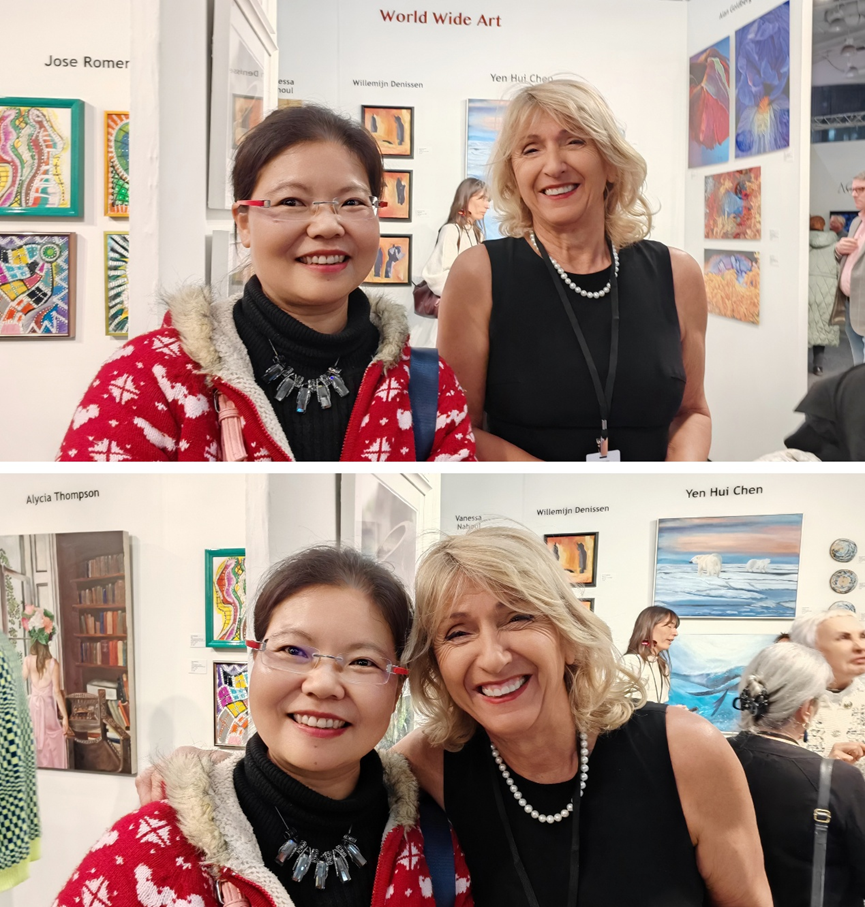
蒲洧与德斯皮娜在纽约艺术博览会上合影
作为国际艺术界的资深策展人,德斯皮娜常年与艺术市场和艺术家打交道,深谙当代艺术市场生态和机制,最近她用幽默讽刺的手法撰写的小说《艺术家必须保持死亡》(The Artist Must Remain Dead)出版,揭示了在金融资本主导的艺术市场下,决定艺术价值的机制是如何影响艺术家生存状态的,引发业界强烈反响。在Artavita / World Wide Art艺术机构代理玄彩画的合作中,德斯皮娜逐渐知晓了蒲洧的艺术经历和创作理念,深刻认识到玄彩画所蕴含的文化价值及社会意义。2026年10月德斯皮娜为蒲洧撰写策展评论文章,向艺术市场、收藏家、策展人、评论家、艺术爱好者推介玄彩画,让更多的受众了解这一来自中国的新型绘画艺术和“精神性”艺术的东方表达。
下面是该文的全文翻译,可作为收藏指南和参考。
2011年,在阔别绘画十多年后的一天,蒲洧做了一个梦。梦里,一位红衣僧人出现在她面前,将一支画笔交到她手中。梦醒之后,她感到整个人仿佛脱胎换骨。在短短两年里,她完成了从具象绘画到抽象艺术的转型,创作出后来命名为“玄妙色(The color of Surupa)”(玄彩画)的系列作品。接着又历经数年,她的画作走出国门,从佛罗伦萨的展览来到迈阿密,并斩获多项国际艺术大奖,这样一段艺术缘起,乍听起来近乎完美,令人难以置信。但当我们看到这场梦境背后漫长的生命积淀,便会意识到:僧人交给她的那支画笔,其实自童年开始,就一直握在她的手里。
蒲洧长期定居中国云南昆明,在当地生活和工作。对她而言,绘画是生命里最初的语言。她回忆自己三岁便深深痴迷于绘画,此后二十八年间潜心修习中国传统绘画,恪守规则,反复揣摩笔墨法度、研习历代沿袭下来的形式与章法。后来,人生轨迹发生了转变:她获得教育技术专业的大学学位,并在教育电视台担任了十二年的编辑,长期从事另一类完全不同的图像创作。
由此可见,2011年的这场梦境,并不是凭空造就了一位艺术家。它唤醒了一位本就深耕画室、一生都保持观察与思索的创作者,将两段人生积淀融会贯通:传统绘画打下的深厚功底,加上长年影像工作积累的图像经验,共同成为她艺术创作的丰厚滋养。
她于2013年开始创作的作品是真正意义上的全新之作,并以佛法义理中的“玄妙色”一词为其命名,“玄妙色”(Surupa)来自于“妙色身王如来”(Surupakaya Tathagata),她意译为“非凡的、奇妙的色彩”,她将“玄妙色”(玄彩画)定义为植根东方哲学与中国文化的新型中国画,把中国意象艺术的精神推向了更高的维度和境界。她对这种作品的诠释大胆而明确:她是首位将藏传佛教大圆满冥想心法,直接运用于当代绘画创作实践的艺术家。无论人们对如此宏大的论断持何种看法,它都精准地指出了作品的独特之处,这些画作并非以冥想作为描绘题材,而是创作者安住于冥想状态之中自然生发出来的绘画。
这种方法源于其哲学理念。蒲洧运用墨、笔、水、宣纸和天然颜料这些传统材料,通过“大圆满”心法进入一种她称之为“空性意识”的冥想状态,并在此状态下最大程度地减少人为干预,任由水、墨、颜色自行流淌、交融、晕染、绽放。
“当我清空内心,”她说,“我的整个存在便与宇宙融为一体,我的内心与宇宙共振。”在她的艺术观念里,首先要顺应自然的力量,其次才是技法;艺术家的任务,不再是强行给画面预设固定造型,而是放空自我、备好画材,静待画面的自然显现。她甚至说,“我有一半的心理意象画都是由超自然的灵性体验所完成的”——这番表述令人震惊,却与她刻意放弃控制的创作实践完全一致,这也与最古老的道家美学理念相契合,正如老子所言:大象无形。
不过,在全然放下执念的创作过程之中,蒲洧仍然描绘出一个清晰的结构——作品经历三个意识层次。在第一层,她称之为“意象”,绘画仍然依附于可见的现实和客观的形象。在第二层“非象”,它徘徊于可见与不可见之间,清晰的投射逐渐模糊成某种难以言喻的存在。在第三层“无相”,个人意识彻底消融,而留在纸上的,在她看来,便是虚空本身的显现。这些层次清晰地展现了一个超越理性的过程,它为观者提供了一种路径,让他们得以追踪图像如何从具象化走向纯粹的色彩、光影和能量。
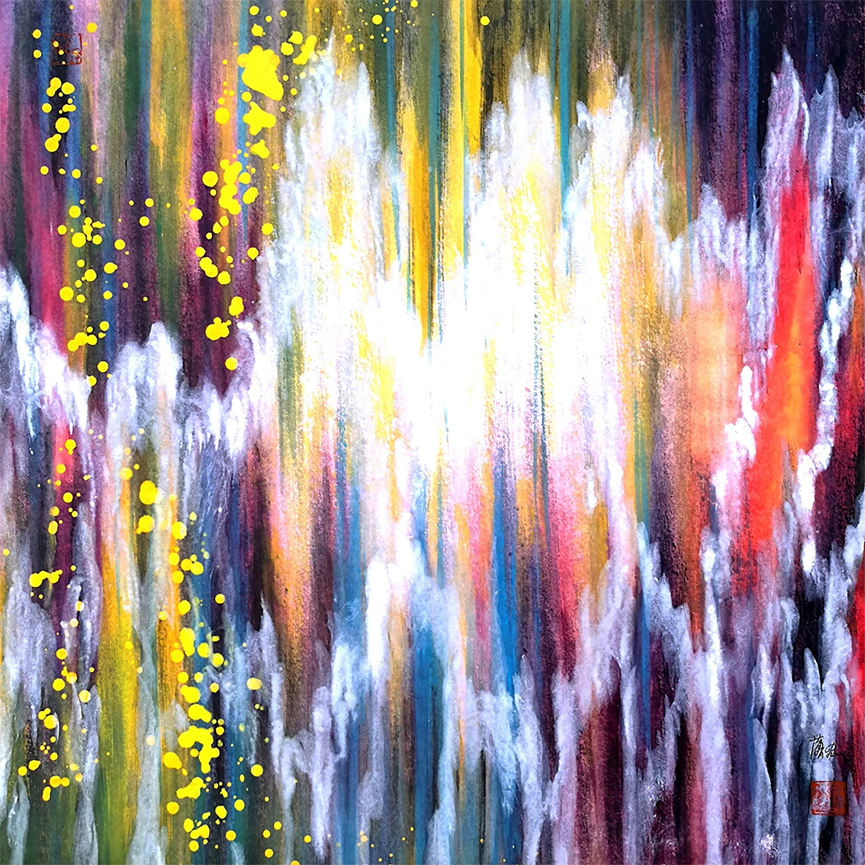
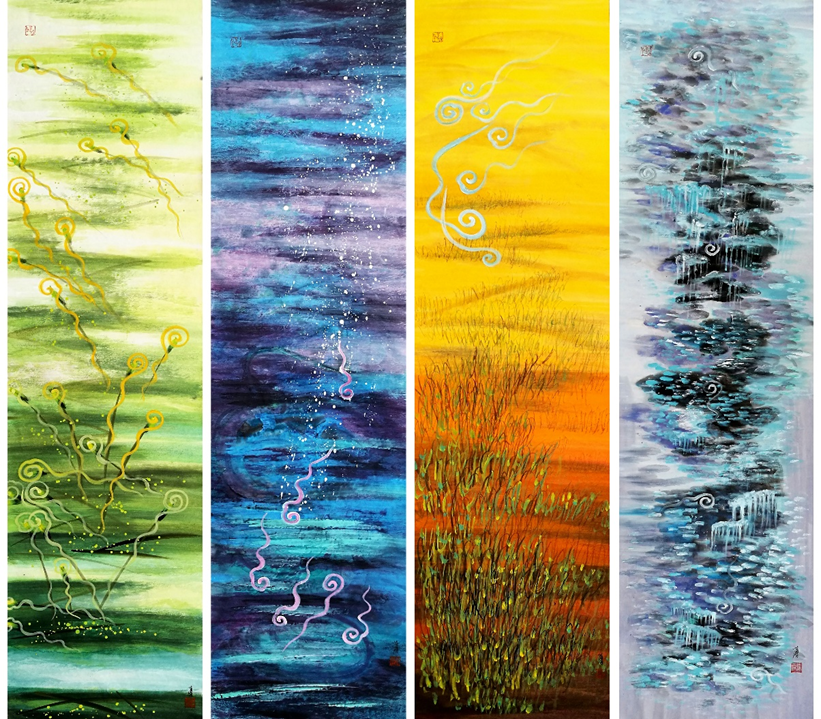
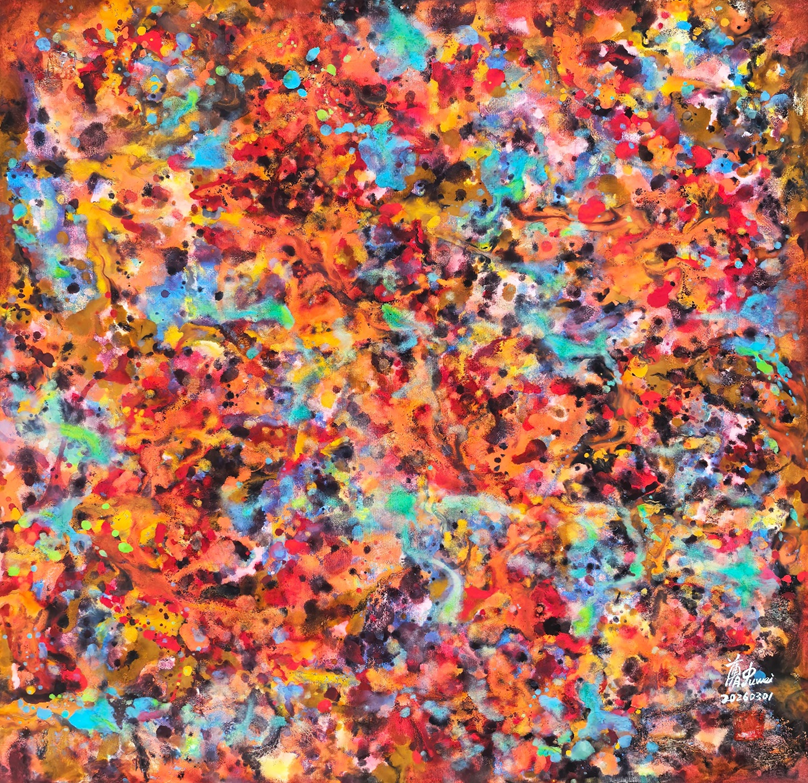
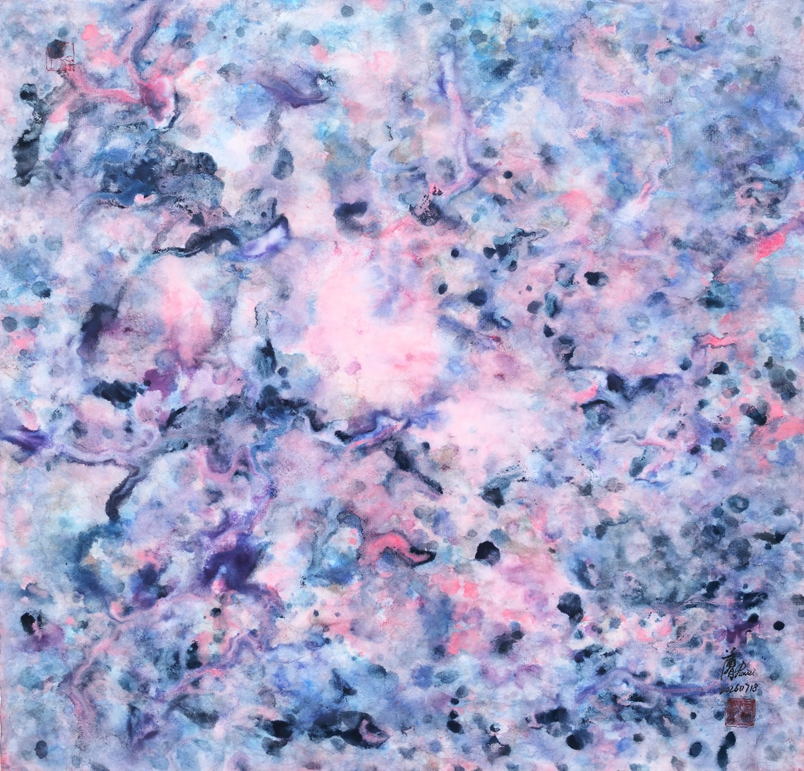
这些画作本身的标题揭示了其精神内涵。《天使心》荣获2019年佛罗伦萨波提切利国际奖,是神圣之心的意象。《吉祥花》汲取了佛教金刚莲花的意象;2020年展出的《彩虹喷泉》以及持续创作的《虚空境》系列则转向纯粹明亮的色彩和形象的消融。她的《四季》系列画作,每幅尺寸为180厘米×45厘米的狭长卷轴,将季节的循环转化为古典挂轴的竖幅形式;而她近期创作的宣纸作品,如《虚空境》系列,尺寸从68厘米到98厘米不等,在小巧的尺幅里,流动的颜料生发出细腻入微、层次丰富的视觉效果。贯穿全部作品的核心永远是光,一种高频色彩,用蒲洧自己的话来说:把更高维度空间里的能量,传递到观者所处的现实空间。
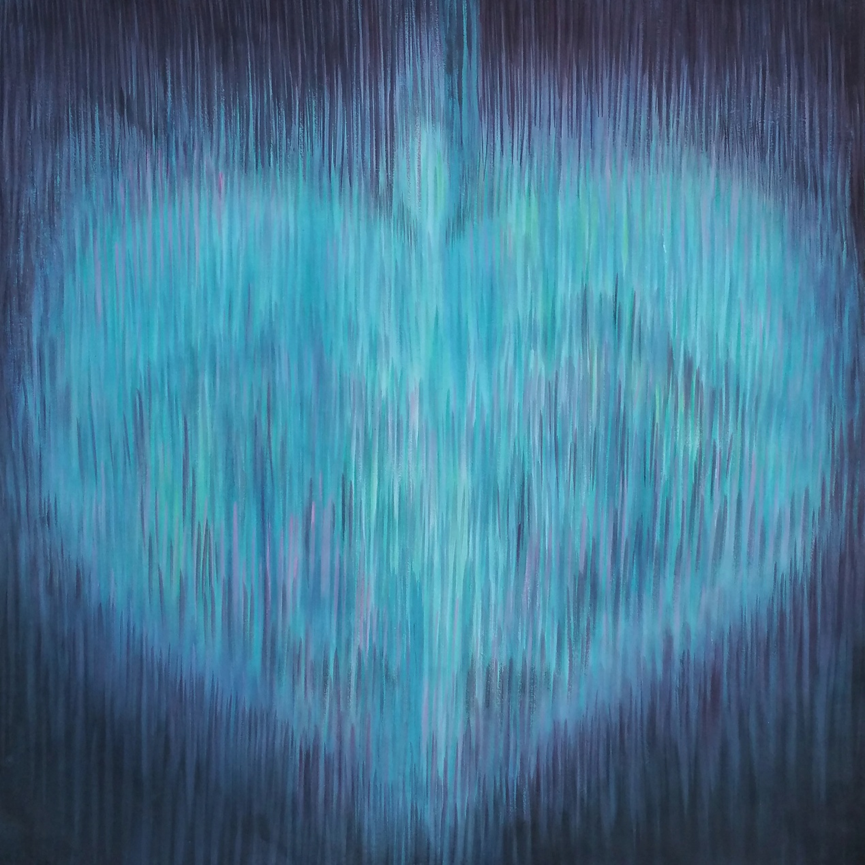
玄彩画《天使心》
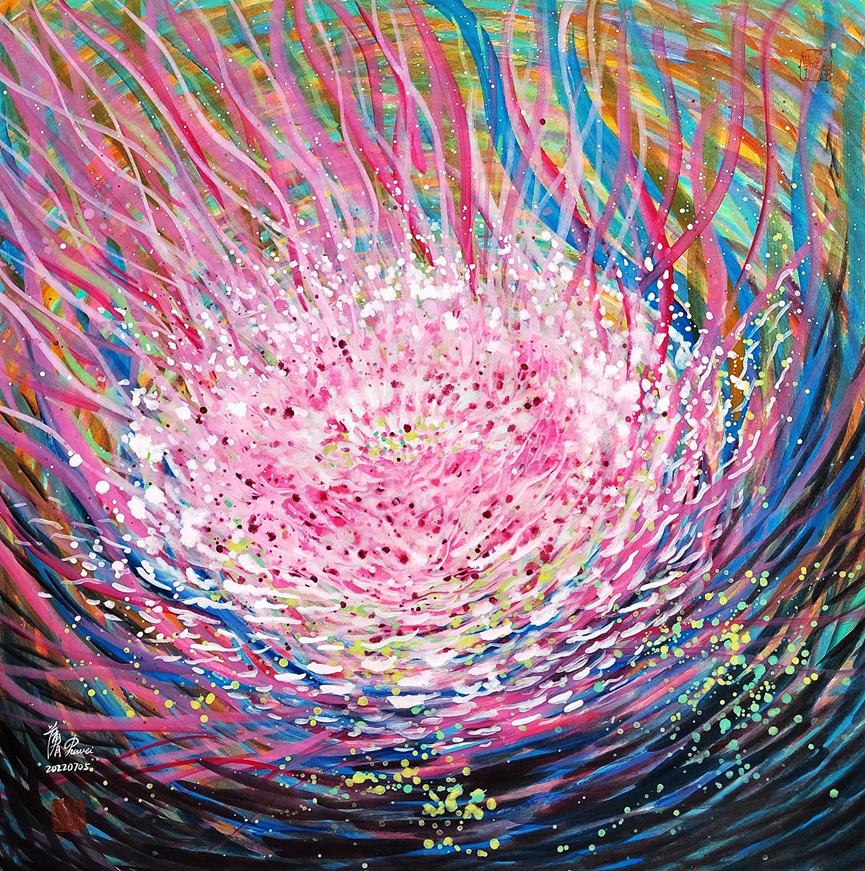
玄彩画《吉祥花》
玄彩画《彩虹喷泉》
玄彩画《四季》
玄彩画《虚空境》系列NO.20260301
这种能量最终承载的是爱——一种普世之爱,蒲洧认为这种爱超越了文化界限,她以一种精神升华来替代艺术作品里常见的社会议题批判。她的艺术诠释东方“天人合一”的思想:人并非独立于自然之外,而是与自然一体相连;尤为关键的一点是,她将解读作品的权利交给观众。“观众可以自行定义和感受”她说,“我想给观众留出自由想象的空间”。在她如此全心致力于虚空的作品中,这并非逃避,而是原则:画作应该保持开放性,一旦给作品明确一个固定的陈述,就违背了作品本身想要传递的自由精神。
国际艺术界如此迅速地接受了这种具有浓厚东方特色和精神内涵的艺术实践,这件事本身就令人注目。仅于2019年,蒲洧接连斩获佛罗伦萨波提切利国际奖、巴塞罗那双年展委拉斯开兹国际奖,同时获得曼图亚当代艺术双年展“年度艺术家”称号;作品参展迈阿密光谱艺术展、圣地亚哥艺术展、葡萄牙里斯本SIGNALATI展览;次年又参展意大利诺曼双年展。
玄彩画《虚空境》系列NO.20260718
对于一位远离西方艺术中心的昆明艺术家来说,以完全自主的、植根于藏传佛教实践的语言进行创作,这是一种非凡的融合,足以证明:她所说的“高频”能量确实能够跨越她所期望打破的文化壁垒。
乍看之下,这些作品光彩夺目、风格奇异,但是其中却蕴藏着内在的连续性,在“玄妙色”的创作中,既有三岁执笔画画的孩童、也有研习二十八年传统绘画的大家、还有电视媒体编辑、以及手握画笔从梦中醒来的女子。蒲洧所呈现的,不只是一种艺术风格,而是一种生命状态:她试图在一幅又一幅的画作中,彻底清空自我,从而让超越自我的存在得以显现。
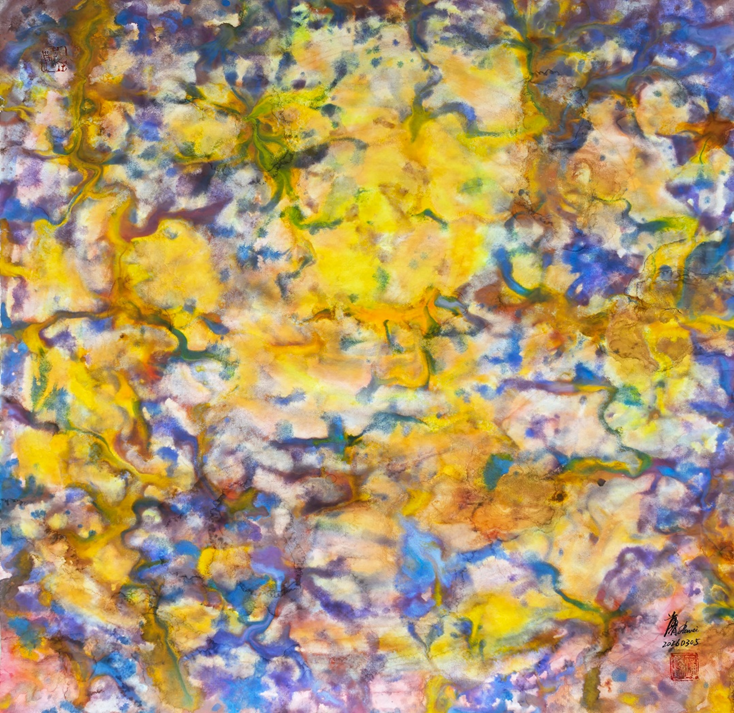
玄彩画《虚空境》系列NO.20260305
藏家视角:
对于藏家而言,蒲洧的作品代表着一种不同寻常且引人入胜的特质:她是一位拥有真正国际资质的当代艺术家,其作品并不追逐艺术市场当下的热门潮流,而是扎根于延续千年的观照修行传统,并以极具个人化的独特方式应用于绘画之中。
她的作品在多个层面打动观者。从美学角度来看,“玄妙色”绘画明亮、色彩丰富且极具吸引力,其流动的色彩和消融的形态,无论是初次观赏还是长时间的冥想凝视,都令人回味无穷。从观念层面来看,这些作品建立在一整套充分阐述的哲学和方法之上——意识的三层境界、大圆满的修行——这赋予了作品在装饰性抽象艺术中极为罕见的智性和精神深度。从《虚空境》系列中精湛的宣纸作品到庄严的《四季》卷轴,蒲洧的作品形式多样,为需要不同尺寸的艺术爱好者提供了丰富的选择。波提切利奖、委拉斯开兹奖、曼图亚双年展、迈阿密光谱展、圣地亚哥艺术展等一系列国际展览与奖项的记录,印证了她早已建立的超越国界的声望。
如果您是这样一位收藏家,不仅追求兼具美感与深度的作品,而且还喜欢既承载悠久传统又充满创新活力的作品,并愿意将观画本身当做一场冥想的体验,那么蒲洧的艺术创作值得我们认真而持续地关注。
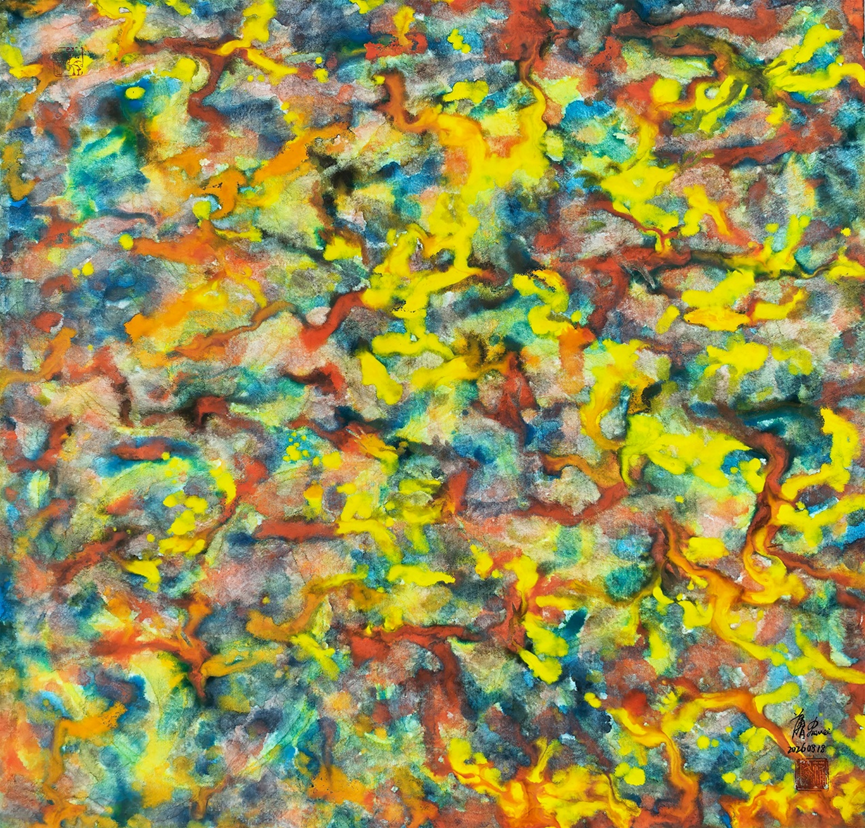
玄彩画《虚空境》系列NO.20260818
德斯皮娜•滕伯格撰写的原文:
Pu Wei: The Color of Surupa — Painting in the State of Emptiness
A Curatorial Review by Despina Tunberg(Curator & Author, World Wide Art / Artavita)
In 2011, after more than one decades away from serious painting, Pu Wei had a dream. A monk in red robes appeared and placed a brush in her hand, and she woke changed. Within two years she had transformed her art from figuration to abstraction and arrived at the body of work she would call The Color of Surupa; within a few more she would be exhibiting it from Florence to Miami and gathering international prizes. It is the kind of origin story that can sound, in summary, almost too neat — until one learns how much labour and how long a life preceded the dream, and understands that the brush the monk handed her was one she had, in truth, been holding since childhood.
For Pu Wei, who lives and works in Kunming, in China’s Yunnan province, painting was the first language. She has said she was drawn to it at the age of three, and she went on to spend some twenty-eight years mastering the disciplines of traditional Chinese painting — the long apprenticeship in brush, ink, and the inherited grammar of the form. Then life took another turn: she earned a university degree in educational technology and spent twelve years working as an editor for educational television, a career in images of an entirely different kind.
The dream of 2011 did not, then, summon an artist out of nothing. It called back to the studio someone who had already given a lifetime to looking, and who now returned with everything those two lives — the classical training and the years of broadcast image-making — had taught her.
The work she began to make in 2013 was genuinely new, and she gave it a name drawn from Buddhist scripture. "Surupa," from Surupakaya Tathagata, she translates as "extraordinary, fantastic colours," and The Color of Surupa is her term for what she describes as "a new type of Chinese painting rooted in Eastern philosophy and Chinese culture, which pushes the art of Chinese mental imagery to a higher dimension and level." The claim she makes for it is bold and specific: that she is the first painter to bring the meditation methods of Great Perfection — the Dzogchen teachings of Tibetan Buddhism — directly into the practice of contemporary painting. Whatever one’s view of so large a claim, it names precisely what sets the work apart. These are not paintings about meditation; they are paintings made from within it.
The method follows from the philosophy. Working with ink, brush, water, rice paper, and natural pigments — the traditional materials — Pu Wei enters, through the Great Perfection mind method, a meditative state she calls "emptiness consciousness," and from there she minimizes her own intervention, allowing water, ink, and colour to move and pool and bloom largely of their own accord. "When I empty my heart," she says, "my whole being merges with the universe, and my heart resonates with the universe." Technique, in this account, becomes secondary to natural forces; the artist’s task is less to impose a form than to prepare herself, and the paper, for one to arrive. She goes so far as to say that "half of my mental imagery paintings are completed by supernatural life spirituality" — a striking formulation, but one entirely consistent with a practice built on the deliberate surrender of control. It aligns, too, with the oldest Taoist aesthetics: the great form, as Laozi wrote, is without shape.
Within this surrender Pu Wei nonetheless describes a clear structure — three levels of consciousness through which the work moves. At the first, which she calls "like imagery," the painting still holds to visible reality and objective form. At the second, "unlike imagery," it hovers between the seen and the unseen, clear projection blurring into something less nameable. At the third, "emptiness," personal consciousness dissolves entirely, and what remains on the paper is, in her framework, the manifestation of the void realm itself. It is a lucid map of a deliberately non-rational process, and it gives the viewer a way to follow what is happening as the images loosen from representation toward pure colour, light, and energy.
The paintings themselves bear titles that announce their spiritual register. Angel Heart, which won the International Prize Botticelli in Florence in 2019, and Auspicious Flower draw on the imagery of the sacred heart and the Vajra Lotus of Buddhist iconography; Rainbow Fountain, shown in 2020, and the ongoing Void Realm series turn toward pure luminous color and the dissolution of form. Her Four Seasons paintings — tall, narrow panels each measuring 180 by 45 cm — translate the seasonal cycle into the vertical format of the classical hanging scroll, while recent works on rice paper, the Void Realm series ranging from 68 to 98 cm, show the intimate scale at which her flowing pigments achieve their most delicate effects. Across all of them the constant is light: high-frequency colour that seems, in her words, to carry energy from a higher-dimensional space into the room where the viewer stands.
What that energy is meant to carry is, finally, love — a universal love that Pu Wei believes transcends cultural boundaries, and a spiritual elevation she offers in place of the social commentary she deliberately avoids. Hers is an art of the "unity between heaven and humanity," the Eastern conviction that the human being is not separate from nature but continuous with it; and it is, pointedly, an art that hands its meaning to the viewer. "The audience can define and feel by themselves," she says. "I want to give the audience room to imagine freely." In a body of work so committed to emptiness, this is not evasion but principle: the paintings are left open because a closed statement would betray the very freedom they exist to transmit.
That the international art world has embraced so deeply Eastern and deeply spiritual a practice so readily is itself notable. In 2019 alone Pu Wei received the International Prize Botticelli in Florence, the Velázquez International Prize at the Barcelona Biennial, and the title of Artist of the Year at the Mantua Contemporary Art Biennale, and she exhibited at Spectrum Miami, at Art San Diego, and in the SEGNALATI exhibition in Lisbon; the following year brought the Biennale dei Normanni in Italy. For a painter working far from the Western art capitals, in Kunming, in a wholly self-directed idiom rooted in Tibetan Buddhist practice, it is a remarkable convergence — evidence that the "high-frequency" energy she speaks of does indeed communicate across exactly the cultural boundaries she hopes to cross.
That is the coherence beneath work that might, at first, seem simply luminous and strange. The child who painted at three, the master of twenty-eight years’ traditional training, the television editor, and the woman who woke from a dream with a brush in her hand are all present in The Color of Surupa. What Pu Wei offers is not a style so much as a state — the attempt, painting after painting, to empty herself completely enough that something larger than herself can appear.
From a Collector’s Eye
For the collector, Pu Wei represents an unusual and compelling proposition: a contemporary painter with genuinely international credentials whose work is grounded not in the market’s prevailing concerns but in thousands of years contemplative tradition, applied to painting in a way she can credibly call her own. The work rewards attention on several levels. Aesthetically, the Surupa paintings are luminous, chromatically rich, and immediately arresting, their flowing pigments and dissolving forms rewarding both the first glance and the long, meditative look. Conceptually, they rest on a fully articulated philosophy and method — the three levels of consciousness, the Great Perfection practice — that lend the work an intellectual and spiritual depth rare in decorative abstraction. The range of formats, from the intimate rice-paper works of the Void Realm series to the stately Four Seasons panels, offers entry points across scales, while the record of major international prizes and fairs — Botticelli, Velázquez, Mantua, Spectrum Miami, Art San Diego — confirms a reputation already established well beyond her region. For the collector drawn to work that is at once beautiful and profound, that carries the authority of a long tradition and the freshness of a genuine innovation, and that treats the act of looking as itself a form of meditation, the practice of Pu Wei is worth serious and sustained attention.
蒲洧玄彩画近年来主要的国际展览经历:
1、2026年9月26日至10月2日意大利艺术年鉴《Artisti2026》暨《50个当代艺术偶像》专集入选艺术家作品展览,Effect Art Gallery,巴勒莫,意大利。
2、2026年5月8日至10日瑞士第28届当代艺术展——苏黎世国际艺术博览会,玄彩画由美国加州艺术机构Artavita / World Wide Art与法国圈子艺术基金会(Circle Foundation for the Atrs)联合代表参展,苏黎世Plus 5 Center, 瑞士。
3、2026年4月10日至12日巴黎艺术购物博览会“Art Shopping Paris”,玄彩画由法国圈子艺术基金会(Circle Foundation for the Atrs)代表参展,巴黎卢浮宫卡鲁赛尔厅,巴黎,法国。
4、2025年8月1日至30日“SESSION05”国际艺术展,阿祖画廊(Azur Gallery),柏林,德国。
5、 2025年6月24日至29日由意大利Effect Art基金会组织的国际艺术项目“迪拜/北京艺术体验”,36个国家100多名国际艺术家的120幅作品展出,玄彩画参展,北京三影堂摄影艺术中心,北京,中国。
6、 2025年4月17日至20日迪拜世界艺术博览会(World art Dibai),玄彩画由意大利Effect Art基金会代表参加中东最大的当代艺术博览会——迪拜世界艺术博览会,迪拜世界贸易中心,迪拜。
7、 2025年2月22日至23日伦敦Parallax Art Fair艺术博览会,玄彩画由意大利画廊QueenArtStudio Gallery代表参展,这是欧洲最大的独立艺术与设计博览会,伦敦国王路切尔西市政厅,伦敦,英国。
8、 2024年12月4日至8日迈阿密光谱国际艺术展Spectrum Miami,玄彩画由美国A&E Fine Art画廊代表展出,温伍德艺术区,迈阿密,美国。
9、 2024年11月16日至20日意大利费拉拉创意双年展,汇聚了600多名艺术家的作品,其中40多个国家100多名国际艺术家参展,玄彩画应邀展出,费拉拉博览会馆PAD.3,费拉拉,意大利。
10、 2024年11月1日至3日,玄彩画由美国加州艺术机构Artavita / World Wide Art代表参展圣地亚哥当代艺术设计博览会,圣地亚哥会议中心,加州,美国。
11、 2024年9月6日至8日,法国圈子艺术基金会代表玄彩画参加第五届阿姆斯特丹“欧洲艺术博览会EuropArtFair”,法国圈子艺术基金会官网推介玄彩画(https://circle-arts.com/pu-wei),韦斯特加斯Gashouder,阿姆斯特丹,荷兰。
12、 2024年6月11日至16日,瑞士Art Screen TV数字展,巴塞尔海波龙酒店,巴塞尔,瑞士。
13、 2024年5月26日至6月9日,意大利第三届曼图亚国际艺术双年展曁艺术年鉴《Artisti2024》学术展,弗朗切斯科•贡扎加博物馆,曼图亚,意大利。
14、 2024年4月4日至7日,由美国Artavita / World Wide Art艺术机构代表参加纽约艺术博览会(New York Artexpo),纽约Pier36码头,美国。
15、 2024年2月5日至25日,由瑞士Art Screen TV代表参加“冬季数字艺术展”,在全球最大的艺术品电商交易平台Artsy上推广展示。